BOURGEON CAPITAL MARKET INSIGHTS
"You have to be willfully ignorant of the past to not know where this is heading." - Paul Krugman, 2019 New York Times
Markets faltered badly in March, with the S&P 500 posting its worst quarter in four years. Bourgeon, however, navigated the first quarter well, emerging relatively unscathed and up roughly 1.5%. This left us well positioned to take advantage of the sharp second quarter recovery that witnessed the S&P 500 return 15.2%, its best quarterly performance since the 2020 spring recovery coming out of Covid. As a result, Bourgeon is having one of our best years ever, even after an excellent 2025. The actively managed Bourgeon equity strategy in client accounts was, on average, up around 20% halfway through the year. This equity outperformance resulted in many accounts with meaningful allocations to fixed income surpassing the S&P 500's returns by quarter-end. The recipe for success this year has been good stock picking, our diversification and our broad-based themes. We were not particularly optimistic at the beginning of the year, and that caution served us well with the onset of operation Epic Fury. It was this prudent positioning, patience, and nimble trading within our themes that has helped us outperform.
Playing with Fire
We are determined to remain vigilant and mindful of the current environment, while also assessing the outlook ahead. The stop and start war with Iran appears to be back on again as we write this letter, with both sides exchanging barrages larger than any time since the MOU was signed. We now appear worse off than ever in the Middle East with Iran emerging more powerful strategically and entrenched politically against regional neighbors and the US. Rates are higher, debt is higher, and inflation remains stubbornly high even as oil prices fade from recent peaks. Our allies continue to lose faith and trust in the US, compounded by Trump lashing out at the latest NATO meetings. Despite these geopolitical tensions, stock markets across the globe remain buoyant. Semiconductor companies exploded in the second quarter, and the first of some major IPO offerings were able to successfully get through the capital markets. In both cases, some of the exuberance surrounding these investments have faded in the first week or so of July. There are lots of issues to keep one’s eye on and many reasons to think that perhaps markets have become too speculative and participants have lost their sense of judgment. History has seen this many times before.
Themes are Still Intact
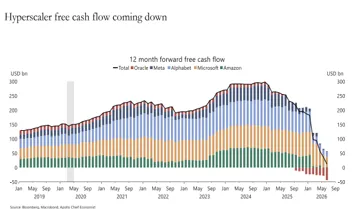
We remain fully committed to the transformative potential of Artificial Intelligence (AI). However, our primary concern aligns with past technology cycles: the disconnect between long-term AI development and short-term investor risk tolerance. The Magnificent Seven are underperforming because they have evolved from dominant, high-margin businesses generating substantial free cash flow, strong earnings growth, and exceptional returns on invested capital into companies facing slowing earnings growth, margin compression, rising debt issuance, weaker free cash flow generation, and more questionable returns on incremental invested capital. This is not a good development in a higher interest rate and high PE environment.
Fortunately, the broader market picked up in the second quarter, led higher by one of our core themes: power generation. That includes an array of producers across electrical, gas, alternative energy, batteries, etc., all of which help power data centers and hyper scalers. Coupled with these electron producers, the market also embraced a broad group of companies building the tools and equipment critical in delivering power to the data center campuses: from building the transmission lines and pipelines to transformers and beyond. We continue to believe strongly in this theme, though we err on the side that it will play out more slowly and deliberately than current expectations. As with all of the above, it’s about the time horizon. We continue to have patience here and think the runway is long, but we do think the theme has a long way to go.
The Outlook Warrants Caution But.... Opportunities Arise
Concerns expressed in our last quarterly letter and reiterated above will continue to shape our thinking in the second half of the year—particularly in an election year, when rhetoric from all sides is likely to intensify. As we discussed before, we think the war and its ramifications will have long-term effects that will be felt over the next decade. We in the US are in better shape because of our AI lead and our oil production, but we are not immune. Our issues of economic and income disparity are likely compounded as AI becomes more dominant. We are concerned about the majority of consumers as they remain under duress, and small business sentiment continues to be very weak.
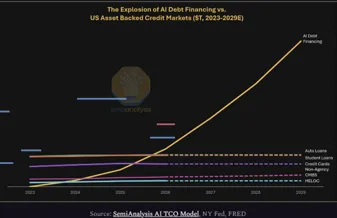
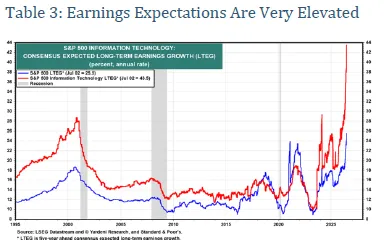
We are surprised so far by both the strength of earnings and dramatic increase in analysts’ expectations. We are looking forward to seeing second quarter calls over the next month. To date, both earnings and margin growth have continued the strength seen in the last few years. We are concerned on a few fronts. First, elevated interest rates with stubbornly high inflation are problematic. The Fed is stuck for now and may even have to raise rates. This higher cost of capital was not in base assumptions to start the year. Second, hyper scalers building out large projects incur significant expenses and depreciation costs. These expenses will eventually weigh on earnings, and investors will start to question how long will they carry on this way and when will the historically huge expenses flow through to the earnings numbers? No one will know the true ROI of these projects until 2028 and beyond. At current valuations, this may prove to be too long for some investors. Hyper scalers have become a drag on indexes and portfolios in the last few weeks.
As you know, we own tech companies but not all the Magnificent 7, and that’s the secret source of diversification. When there’s too much concentration in some areas, it leads to the dislocation of others. Currently, almost the entire large cap tech complex is priced at the high end of the range, but there are many companies and sectors that are not. Healthcare won’t go away, nor will biotech, food or energy. Many companies in these sectors are at historically low valuations and should not be ignored. We are seeking to add new names in these areas and continue to look for other sectors that have been overlooked by the market as it narrowed to historic levels. We have thus far come up with selections like Boston Scientific, Ecolab and PPG. We understand these names may require patience, but we remain confident that over time they should find favor among investors and deliver meaningful upside.
Last quarter, we highlighted the problems that private equity firms and alternative managers are having in fulfilling client requests for redemptions in private credit funds. The headlines in this space will likely persist. We ultimately expect that this will be considered a maturation of the asset class and that the fund structures will prevail by protecting the investors who understand the products and have a longer timeline for the strategies. We like the alternative space long-term, so we will continue to vigilantly wait and watch. While elevated rates generally challenge private equity, a resurgent M&A and IPO market provides viable pathways to resolve outstanding portfolio pressures. Taking markdowns is finally becoming a way of life and much more realistic. This reset, though painful, will prove a constructive clearing event.
The primary area of concern in finance is margin debt, which is at extreme levels, and there is a huge leverage at the dealer levels in the financial system on Wall Street. Equity funding costs are skyrocketing, and many firms have been pushed to the limit by leveraged ETFs and other borrowing across the hedge fund community. The readthrough becomes a potential bank issue, as that’s where some of these firms borrow their money and get funded. We are watching closely, but credit spreads thus far are calm, and there appears to still be a lot of cash around the system, as has been the case in the last few years. Banks themselves are in exceptionally fine shape, and their balance sheets haven’t been better in decades. Given where the yield curve stands, banks’ ability to generate increasing profits remains strong, even with softer loan demand than in the past.
Overall, for the second half, we will continue deploying to our themes of electrification, manufacturing, healthcare, defense, AI technology, industrialization, and energy of all kinds. The broad-based moves already experienced in many of these sectors is somewhat self-sustaining for now and for the future, as far as we can see. It can be helped by Congress or the administration, but it doesn’t appear likely to be stopped at this point. A favorite fact related to this sustained transformation is that in 2025, 87% of all new power in the conservative state of Texas that came online was wind, solar, and natural gas powered. Who would have thought?
Moving Our Feet
We continue to be risk-averse given what we perceive as an abundance of potentially large macro and political risks on the horizon. Our focus, as always, remains the prudent stewardship of your accounts. As we move through the remainder of the year, our priorities will be preserving capital and managing portfolio activity in a tax-efficient manner. In the second quarter, we trimmed or took profits in five portfolio holdings.
We initiated or added to positions in Enphase, Visa, ECL, Boston Scientific, and Primoris.
Taxable accounts sold NXPI to take a loss. We plan to buy it back for those accounts in the future.
In total, we deployed a significant portion of the cash raised in the first, as well as reinvesting some of the proceeds from the sales this quarter. Cash within the equity portion currently stands at about 14%.
New Addition
Visa is a previous Bourgeon holding. It underperformed the last few years on perceived risk of competition from various emerging Fintech players, as well as bitcoin and various coin communities on the premise that Visa and Mastercard would be pushed to the sidelines. We have determined that the guardrail of their systems is highly entrenched within Fintech firms to some degree and will continue to stay relevant. Visa should continue to grow earnings. It has worked well so far.
Boston Scientific is one of three major minimally invasive medical instrument players for the cardiovascular system. This ranges from the heart to urology and neurology. It has been driven lower by several factors: fear that GLP‘s will eliminate the need for these industries in the future, poor management at the company, scientific setbacks and lack of financial performance. With a new management team and finally some decent products, we expect things to turn. It is the cheapest it has been on a free cash flow and cash flow basis in decades, the balance sheet is in great shape, and we expect earnings growth going forward.
Finally, we added two names in our power and industrial themes.
One is Ecolab, a long-term darling of the market that had some business issues but never lost its leadership in the water filtration segment, as well as other sanitary areas of industrial and consumer economy. It has now made a great acquisition in the data center cooling service business, putting it at the forefront of the fast-growing area of data center cooling systems with 11,000 service people. Ecolab should be the leader in this area, servicing the water side, which is a primary cooling system for most of the data centers in this country.
Primoris primarily builds pipelines but also maintains capabilities in electrical transmission and solar plant construction. Their expertise and long-standing leadership in pipeline construction is the core of the business. It has a highly trained sales force, much in demand within the industry. It recently experienced delays and delivery challenges in its solar construction segment across multiple projects, causing the stock to drop by 50%. As a result, several management positions were eliminated. While the solar business had previously been a good segment of theirs, it is relatively minor. The reason we wanted to own Primoris is for their pipeline and transmission business, where they are the leader. At current depressed prices, we feel confident that the growth and upside in the pipeline and transmission business will likely reward us in the future.
Alternatives in Bourgeon Portfolios
Throughout the quarter, we continued to deploy capital to various alternative strategies. We differentiate these strategies between: Private Equity, Private Infrastructure, Private Credit, and Private Real Estate. We also consider Real Assets to be an alternative exposure, but we access this through a fully liquid, daily traded mutual fund.
Individual investors increasingly access alternative strategies through semi-liquid fund structures. These funds offer quarterly liquidity but with restrictions. Private Credit continues to limit the amount of money investors can back relative to what they are requesting. This feature, designed to protect the existing investors who are choosing to stay in the fund, makes for bad headlines and will take time to normalize. In the meantime, the strategies continue to perform as expected, and an argument can be made that underwriting standards for new loans in this environment are more diligent and will make the asset class stronger on the other side. We have recently heard it argued that “the turn in private credit” is occurring in real time.
Private infrastructure, equity, and real estate funds are having good years inline with our expectations and for the purpose they serve in diversified portfolios. Real assets are also having a good year, though they did struggle in the second quarter as some of the inflation concerns around the war began to abate. We continue to believe that alternative strategies can be effective allocations in broadly diversified portfolios, so long as holdings are sized appropriately and the liquidity constraints are taken into consideration.
Model Portfolio
Our model portfolios are designed to trade broadly in line with the global markets and asset classes to which they have exposure. All equity holdings traded up sharply throughout the quarter; fixed income was generally flat, and real assets were down after having been one of the best performers in the first quarter. Emerging markets and small cap strategies were particularly strong in the second quarter.
These diversified portfolios provided significant absolute returns during the second quarter, making their year-to-date performance solid across the strategies: Conservative, Balanced, Moderately Aggressive and Aggressive. They are a nice complement to the active Bourgeon stock strategy. Where they are held in taxable accounts, they will generally not produce meaningful taxable gains on a year-in-and-year-out basis.
Within the quarter, we swapped two mutual fund holdings for comparable ETF strategies. We see the ETF wrapper as advantageous to a mutual fund. In one case, the ETF is run by the same manager as the mutual fund and has nearly identical holdings.
Yields Remain Attractive Amid Inflation and Geopolitical Uncertainty
Fixed income markets continued to experience volatility during the quarter. While inflation has moderated from its post-pandemic highs, it has remained stubbornly above the Federal Reserve's long-term target. The appointment of Kevin Warsh as the new Federal Reserve Chair adds another layer of uncertainty as markets await further clarity on the direction of monetary policy.
Complicating matters are the ongoing tensions in the Middle East. Higher oil prices resulting from geopolitical uncertainty have the potential to keep inflation elevated, placing the Federal Reserve in a difficult position. On one hand, slower economic growth would typically argue for lower interest rates. On the other hand, persistent inflationary pressures may require the Fed to keep policy restrictive for longer—or even consider additional tightening if inflation proves more persistent than expected.
This letter should not be relied upon as investment advice. Any mention of particular stocks or companies does not constitute and should not be considered an investment recommendation by Bourgeon Capital Management, LLC. Any forward-looking statement is inherently uncertain. Due to changing market conditions and other factors, the content in this letter may no longer reflect our current opinions. Different types of investments involve varying degrees of risk, and there can be no assurance that the future performance of any specific investment, investment strategy, or product made reference to directly or indirectly in this letter will be profitable or suitable for your individual portfolio. In addition, past performance is no indication of future results. Please contact us if you have any questions regarding the applicability of any matter discussed in this letter to your individual situation. Please contact us if your financial situation or investment objectives change or if you wish to impose new restrictions or modify existing restrictions on your accounts. Our current firm brochure and brochure supplement is available on the website maintained by the Securities and Exchange Commission or from us upon request. You should be receiving, at least quarterly, statements from your account custodian or custodians showing transactions in your accounts. We urge you to compare your custodial statements with any reports that you receive from us.